Sea Moss: An Honest Look at the Benefits and the Risks
Updated: Oct 27
Sea moss is everywhere right now: gels, gummies, capsules, and labels promising "92 minerals". When we first wrote about it, this post read a lot like the rest of the internet: a cheerful list of benefits with no fine print.
We've rewritten it, because you deserve the version with the fine print.
What sea moss is
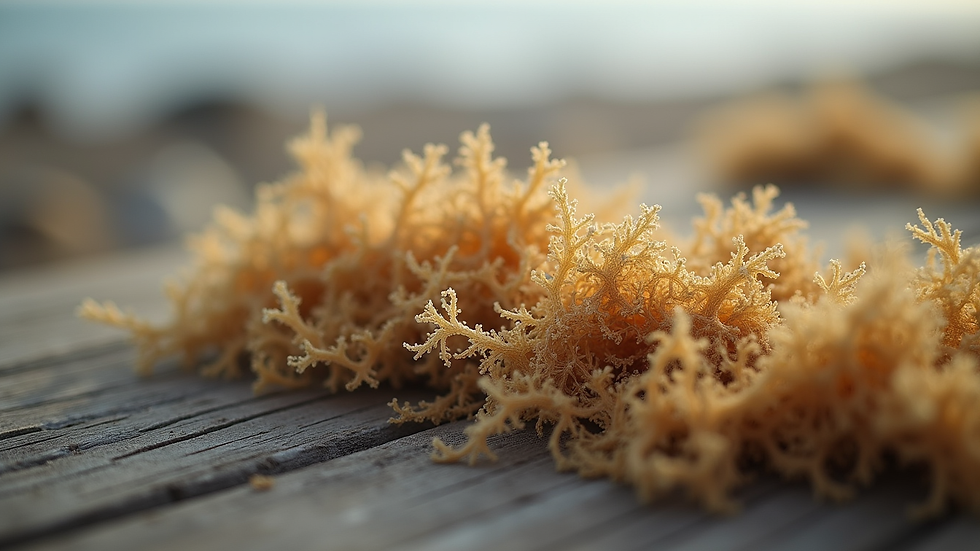
"Sea moss" isn't one plant. It's a common name for several red seaweeds. The best known is Chondrus crispus, often called Irish moss, which grows along North Atlantic coasts. Related red seaweeds from warmer waters, including the Caribbean, are sold under the same name.
Nutritionally, it's low in calories, with small amounts of carbohydrate, fiber and protein, plus minerals including iodine. It has long been harvested for carrageenan, a thickener used in foods like ice cream and puddings, so you've probably eaten a sea moss product without knowing it.
A food with a long memory
Long before it was a wellness trend, sea moss was food. In both Ireland and the Caribbean, there are recipes going back to the 1800s that treat it as food, and as food-as-medicine. In the Caribbean, it's often made into a drink.
That history is worth honoring. It also isn't the same as a daily supplement habit.
What the research shows, and doesn't
Here's the honest summary: there are no strong human studies showing that sea moss boosts immunity, clears skin or balances hormones. Most of the research behind those claims comes from lab or animal studies, or from other kinds of seaweed altogether.
The human trials that do exist are small and short. That doesn't mean sea moss does nothing: whole sea moss contains fiber, antioxidants, vitamins and minerals such as zinc, and there's emerging evidence that its prebiotic fibers may support a healthy gut. But you can get those same nutrients from plenty of other foods.
The thyroid question
Your thyroid needs iodine to make its hormones. That's the kernel of truth in "sea moss supports your thyroid". But:
Iodine content in sea moss varies widely by species, where it was harvested and how it was processed. Two jars labeled "sea moss" can be very different.
Too much iodine can trigger thyroid problems, which is one reason people with thyroid conditions are told to avoid sea moss.
If a thyroid symptom is the reason you're looking at sea moss, the right next step is your doctor and a blood test, not a jar of gel.

Heavy metals
Seaweed can absorb metals such as arsenic, lead and mercury, especially when it grows in contaminated water. Some studies of tested seaweeds have found low risk; others have not. One study found powdered sea moss, the kind sold in capsules, with cadmium and lead above California's limits. Sourcing matters.
Talk to your provider first if you…
have a thyroid condition or take thyroid medication
are pregnant or breastfeeding
take a blood thinner (sea moss contains vitamin K, which can interfere with these medications)
If you choose to try it
Treat it like food. Cooking with whole sea moss or gel is a better bet than capsules and powders.
If you buy a supplement, look for one tested by an independent third party.
Watch for allergy signs such as itching or hives. Throat swelling or trouble breathing needs emergency care.
Where we land
We don't sell sea moss. We'd rather offer botanicals we can be completely transparent about: our maca, sold as a food, and Rooted in Rouge, with every ingredient listed on its product page. For more plant profiles, visit the Herb Guide.
No miracle promises. Just what we know, and what we don't.
This article is for general education and is not medical advice. Talk with a qualified healthcare provider before starting any supplement.

Comments